Rhodes Business School and DigitalCampus Partnership
Advancing Workforce Readiness Across Africa
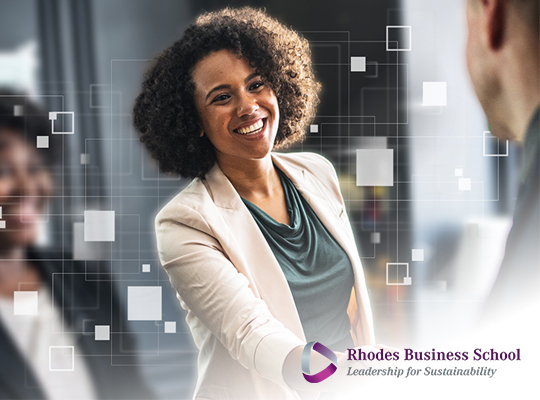
DigitalCampus, powered by LRMG, has partnered with Rhodes Business School to strengthen workforce readiness and professional development across Africa.
The partnership combines DigitalCampus’ practical learning solutions with Rhodes Business School’s focus on ethical leadership and sustainability.
Developing Practical, Future-Ready Skills
Together, the institutions will develop industry-relevant short courses and learning solutions that address real business challenges.
Moreover, these programmes will help organisations build agile, resilient workforces and equip professionals with future-ready skills.
Supporting Ethical Leadership and Sustainability
The partnership also reflects both institutions’ commitment to responsible leadership and sustainable workforce development.
As highlighted in the partnership announcement:
“Rhodes Business School’s philosophy of leadership for sustainability and stewardship strongly aligns with our workforce readiness mission.”
 "This partnership allows us to further serve the continent by connecting both early-career professionals and seasoned leaders to learning that is academically credible, contextually relevant, and commercially impactful – all while driving measurable business outcomes."
Justin Markgraaff, Executive Head: Commercial Strategy and Partner Management at LRMG SA.
Rhodes Business School statement
The partnership will offer short courses and customised learning solutions. Moreover, Category B-aligned programmes will focus on measurable business and transformation outcomes.
Additionally, Rhodes Business School joins DigitalCampus’ academic network alongside Wits University, GIBS and international partner Emeritus. This collaboration further strengthens LRMG’s learning solutions and academic expertise.
About DigitalCampus
Founded in 2014, DigitalCampus is LRMG’s academic learning innovation arm. LRMG helps businesses across Africa unlock their people’s potential.
Furthermore, DigitalCampus partners with leading academic institutions to deliver high-quality learning experiences.
About Rhodes Business School
Rhodes Business School, based at Rhodes University in Makhanda, South Africa, champions “Leadership for Sustainability.” Through this approach, the institution develops ethical, responsible leaders who support long-term business success.
Expanding Access to Executive Education
Evert Knoesen, Executive Education Coordinator at Rhodes Business School, highlighted the importance of accessible learning opportunities:
“Executive Education and Short-learning programmes provide not only an avenue to improve the sustainability of public institutions through private income but, importantly, provide social justice and equity by delivery opportunities for those who were not able to access university education due to social circumstances. Rhodes Business School is excited to partner with LRMG DigitalCampus toward enriching the learning landscape in South Africa.”
Advancing Ethical Leadership Through Collaboration
Furthermore, Professor Owen Skae, Director of Rhodes Business School, emphasised the partnership’s commitment to responsible leadership:
“At Rhodes Business School, we prepare leaders to thrive in a world of paradox, where growth must coexist with responsibility, innovation with ethics, and individual ambition with collective purpose.
Our partnership with DigitalCampus and LRMG is a powerful expression of this philosophy. It brings together academia and business to create learning experiences that are relevant, applied and purposeful. Through this collaboration, we are extending the reach of our three pillars, namely Integrative Thinking, Principled Leadership and Engaged Citizenship – beyond the university, into organisations and communities across Africa.
Leadership for Sustainability has always been at the heart of what we do. This partnership helps us translate that commitment into action by equipping people with the mindset and skills to make better decisions – those that balance economy, ethics, ecology and equity. Together, we’re building pathways for learning that turn paradox into possibility and purpose into progress.”